
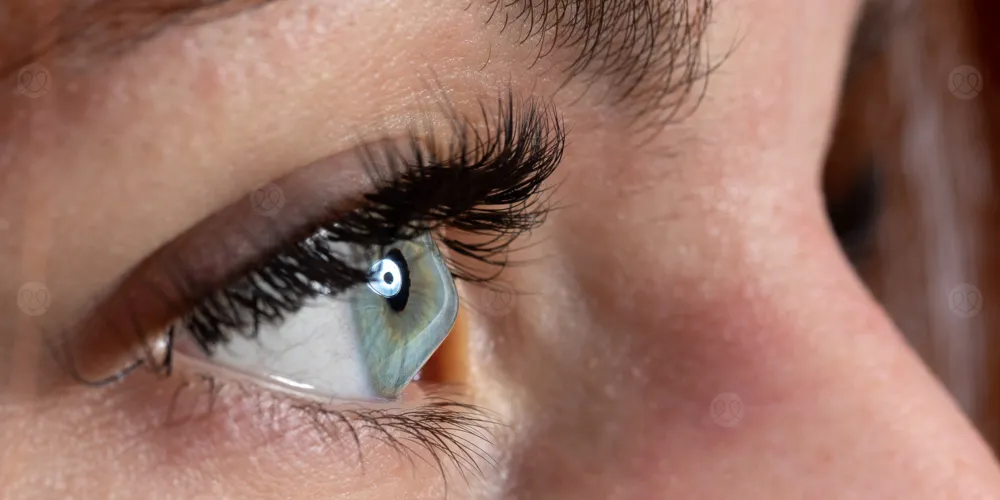
Keratoconus: Treatment with the Best Techniques
Professor Dr. Amin Faisal Ellakwa has provided comprehensive information about the treatment of keratoconus and will accurately answer your questions about the most important techniques for treating keratoconus, its symptoms and causes, and whether keratoconus is a dangerous and difficult-to-treat disease.
The eye is the body's mirror to the outside world, and this is the best analogy for it. It conveys to us the events and happenings around us. When light reflects from an object, it enters the eye through the cornea and lens, and its image converges at a specific point on the retina, then the signal is transmitted to the brain via the optic nerve. This sequence occurs rapidly within fractions of a second. Glory be to the Great Creator who placed this immense capability in that small eye.
The eye—like other organs of the body—is affected by various diseases, including keratoconus, which is relatively rare and is characterized by a bulging of the cornea, giving it a conical shape.
Learn About the Cornea's Characteristics and Functions
Before discussing the treatment of keratoconus, it is essential to briefly mention the cornea and its function.
The cornea is a very thin layer that forms the anterior sixth of the eyeball, connected externally to the conjunctiva and internally to the uvea. Histologically, it consists of 5 layers, in order from outside to inside: the epithelium, Bowman's membrane, the stroma (which forms 90% of the cornea's thickness), Descemet's membrane, and the endothelium.
The normal shape of the cornea is spherical, with a central thickness of approximately (0.58) mm, while it is thicker at its periphery, reaching (1.00) cm.
The cornea is transparent in its natural state to allow light to pass through it into the eye. This transparency is due to the cornea's lack of blood vessels and the parallel and regular arrangement of the fibers in its structure. Its main function is to allow light to pass into the eye and precisely focus the rays of the visible object on the retina in cooperation with the eye's lens, in addition to its role in protecting the eye from external pollutants, germs, and harmful substances.
Many lesions can affect the eye's cornea. These lesions can either cause a disturbance in the cornea's transparency, such as inflammatory factors, or cause a change in the eye's corneal shape, as in keratoconus. These lesions will cause visual problems, the most common of which are blurred vision, the sensation of a foreign body, itching and pain, leading to complete blindness.
Causes of Keratoconus
The causes of keratoconus vary, and we must realize that the conical shape of the cornea begins to form in childhood. However, due to the few symptoms at that time, its diagnosis is usually delayed until after puberty.
Heredity is considered the most important cause of the onset and development of keratoconus, and this theory is supported by the presence of more than one affected individual in the same family in some cases. Repeated exposure to ultraviolet radiation and looking directly at the sun may also cause the disease.
Other implicated factors include incorrectly placed contact lenses, repeated rubbing and vigorous scratching of the eyes, as well as chronic inflammation of the cornea, sclera, conjunctiva, and other parts of the eye.
Studies also indicate the development of keratoconus in a specific category of patients, such as those with albinism, osteogenesis imperfecta, Down syndrome, Ehlers-Danlos syndrome, Marfan syndrome, and premature infants with retinopathy.
Ways to Prevent Keratoconus?
It is not possible to completely prevent keratoconus, but there are some tips that limit the progression of keratoconus and alleviate its symptoms, which are as follows:
- Avoid rubbing your eyes as much as possible and control it, especially in cases of eye allergies.
- Visit an ophthalmologist regularly to ensure eye health.
- Adhere to prescribed eyeglasses and avoid wearing contact lenses.
- Avoid using eye drops randomly or medications prescribed based on the advice of unqualified individuals.
- Pay attention to eye hygiene and avoid introducing objects into them and protect them from all irritating factors.
- Protect your eyes during swimming and exercise by wearing specialized goggles.
Stages of Keratoconus:
- First stage: Stabilization.
- Second stage: Stabilization with ring implantation.
- Third stage: A late stage that then requires a cornea transplant.
Does Keratoconus Lead to Blindness?
The symptoms of keratoconus are varied, and myopia and astigmatism are the most common. In certain cases, it can cause sudden vision loss and deterioration of vision in a specific part of the visual field. It should be noted that keratoconus leads to blindness in a few cases. This is caused by delayed treatment of keratoconus and its progression to very advanced stages. Therefore, treatment for keratoconus should begin at an early stage immediately upon the onset of bothersome symptoms for the patient, and after confirming the diagnosis.
Does Keratoconus Cause Headaches?
We mentioned that myopia and astigmatism are among the most common symptoms of keratoconus. These symptoms force the patient to exert more effort when writing, reading, and looking at near objects, which causes them headaches. Even with the use of eyeglasses, headaches may persist if the astigmatism is severe. If headaches continue despite using lenses, corneal cross-linking becomes the best option to get rid of headaches and primarily to treat keratoconus. Also, cornea transplant surgery is considered one of the latest techniques that helps treat keratoconus, headaches, and other symptoms in the late stage.
Can Keratoconus be Treated with Laser?
One of the therapeutic eye operations is radial keratotomy, which is a surgical procedure that makes radial incisions in the cornea to modify its shape.
Duration of Keratoconus Treatment
In the case of corneal ring segment implantation, the operation for each eye will take approximately 15 minutes, and visits will be allowed hours after the procedure. Corneal cross-linking may take approximately 90 minutes. For other operations, depending on the type of procedure, it may take an hour or more. The patient may need days to rest after the operation and is prohibited from engaging in strenuous sports activities. Regular follow-up examinations every 6 months must continue to ensure the success of the operation and the cessation of keratoconus progression.
Who is the Best Doctor in Egypt for Treating Keratoconus?
Treating keratoconus requires extensive experience from the surgeon. Initially, it requires an accurate diagnosis of the condition, precise determination of its stage, and selection of the optimal treatment solution as deemed appropriate by the doctor. These challenges require a specialized surgeon with extensive experience in the field of keratoconus treatment, such as Dr. Amin Faisal Ellakwa, who has over 25 years of experience.
The doctor's expertise resulted from many factors:
- His great dedication to his work and his keenness on patient comfort.
- Professor of Ophthalmology and Eye Surgery - Menoufia University.
- Over 25 years of experience.
- Performed thousands of successful operations inside and outside Egypt.